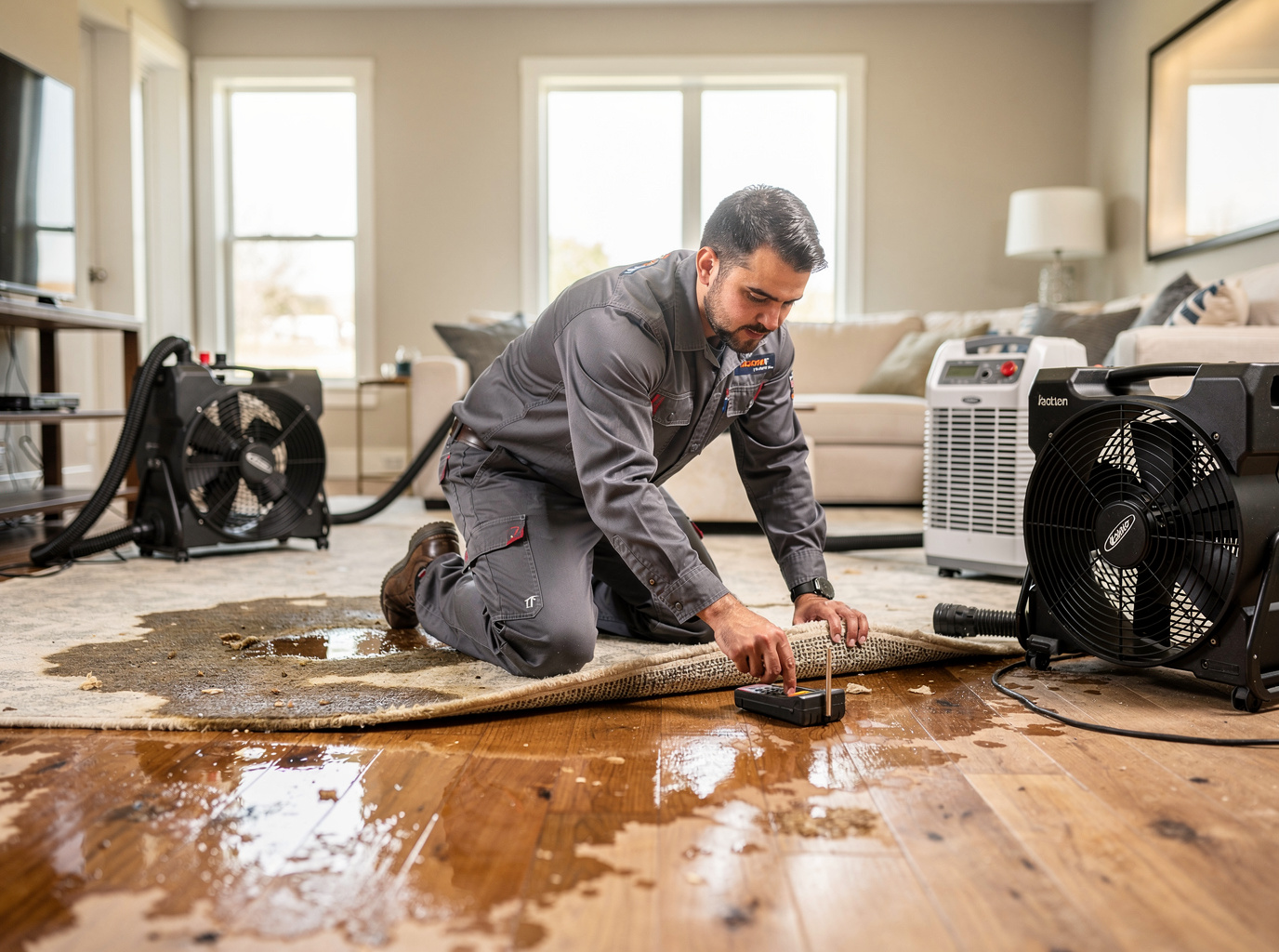
Houston's subtropical climate keeps relative humidity high even in mild winters, so standing water in a Montrose bungalow or Heights cottage can drive hidden moisture into lathe-and-plaster walls within hours. Technicians must pull baseboards early and use moisture meters on brick piers common in pre-1960 homes, because trapped dampness behind original shiplap leads to recurring musty odors that standard fans cannot reach.
River Oaks and Midtown properties often sit on clay soils that hold water after heavy rains, pushing seepage through slab edges and into HVAC returns. Restoration crews isolate affected duct runs quickly, because once mold colonizes flex duct in these humid conditions the entire system requires removal rather than simple cleaning. Downtown high-rises add another layer: water migrating down multiple floors through concrete pours demands negative-pressure containment on each level to protect neighboring units.
Katy and Sugar Land subdivisions built on former rice fields face different challenges; slab-on-grade homes there frequently lose carpet and underlayment to groundwater intrusion after prolonged summer storms. Drying times stretch because ambient moisture rarely drops below 60 percent, requiring low-grain dehumidifiers run continuously rather than the shorter cycles sufficient in drier climates.
Pearland and surrounding Harris County areas see frequent roof leaks from wind-driven rain; when water travels along rafters into insulation, crews must open ceilings in a staged manner to avoid collapsing saturated sheetrock while still documenting every step for insurance adjusters familiar with local codes.
Technician insight
In Houston the thing that catches most people out with water damage restoration is how quickly mold takes hold once humidity stays above 55 percent for more than two days; older plaster walls in the Heights and Montrose hide pockets of moisture that standard box fans never reach, so we always pull trim and run metered readings on every job.
River Oaks Slab Leak
Water migrated from a guest bath under the slab into the dining room. Infrared scans showed elevated moisture along the brick pier line common in 1950s construction. Crews isolated the leak, extracted water, and ran low-grain dehumidifiers for six days until readings matched the unaffected wing. The homeowner avoided full floor replacement.
Water Damage Restoration Services We Offer
✓Emergency Water Extraction
Rapid removal of standing water from kitchens and bathrooms in Montrose and Heights homes before humidity drives moisture into subfloors.
✓Structural Drying in Humid Climates
Deployment of low-grain dehumidifiers and air movers calibrated for Houston's summer moisture loads to protect plaster and hardwood in River Oaks properties.
✓Slab Leak Drying and Containment
Targeted drying under concrete slabs common in Midtown and Downtown buildings while maintaining negative pressure to prevent cross-contamination.
✓Post-Flood Insulation Removal
Safe extraction of saturated batt and blown-in insulation from older Heights and Montrose attics where mold sets in within 48 hours of subtropical rains.
✓Sewage Backup Cleanup
Category 3 water removal and disinfection for properties near aging sewer lines in Montrose and Midtown after heavy Harris County storms.
✓Document and Photo Drying
Freeze-dry recovery of family records and business files for Downtown offices and River Oaks residences hit by overhead leaks.
Water Damage Restoration Cost in Houston, TX
| Service | Typical Range | What Affects It |
|---|---|---|
| Water Extraction | $600–$1,800 | Depends on volume and access in slab homes common in Midtown. |
| Full Structural Drying | $1,200–$3,500 | Longer runs needed when ambient humidity stays above 60 percent. |
| Insulation And Drywall Removal | $800–$2,400 | Varies with square footage and whether plaster or sheetrock is present. |
| Sewage Cleanup Add-On | $900–$2,200 | Includes disinfection for Category 3 water in older Montrose properties. |
Ranges are typical for Houston, TX and confirmed with an exact written quote before any work starts.
How it works
- 1
Arrival And Containment
Technicians arrive from the 77041 location, set up containment barriers, and stop the water source while protecting unaffected rooms in the home.
- 2
Moisture Mapping
Infrared cameras and meters locate hidden water in walls, floors, and ceilings typical of Houston's older housing stock.
- 3
Water Removal
Pumps and extractors pull standing water, followed immediately by drying equipment sized for local humidity levels.
- 4
Monitoring And Final Clearance
Daily readings continue until moisture levels match unaffected areas; final walkthrough confirms no residual dampness remains.
Pricing
Pricing varies by scope, affected materials, and drying duration required by Houston humidity; written estimates provided before work begins.