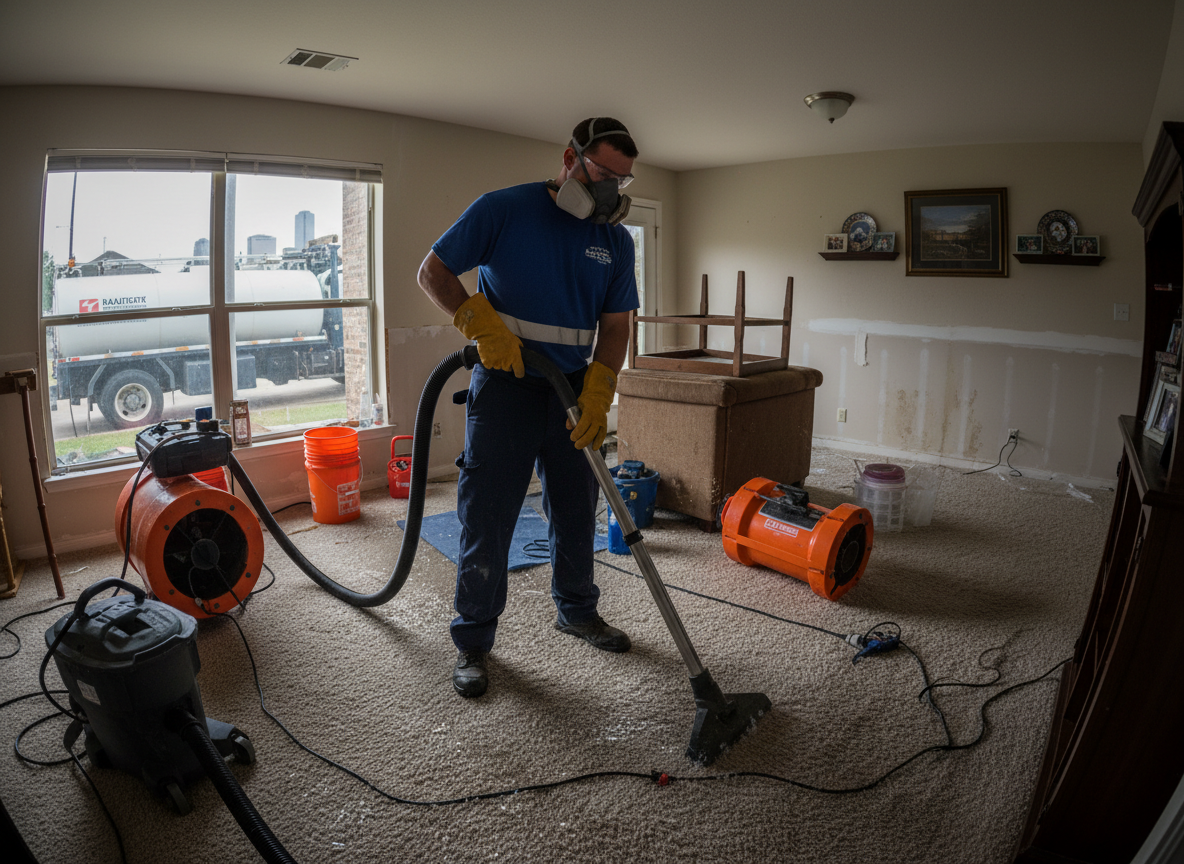
Houston’s subtropical climate brings frequent heavy rains and high humidity that quickly turns minor leaks into widespread issues in older homes found throughout the Heights and Montrose. Many properties built before 1980 still have original cast-iron or galvanized lines that corrode and fail during summer downpours, sending water into hardwood floors and plaster walls. Technicians must account for the city’s clay-heavy soils that hold moisture and push water toward foundations in areas like River Oaks and Midtown.
Cleanup crews prioritize rapid extraction because standing water in a humid environment can lead to mold within 48 hours. They use industrial air movers and dehumidifiers calibrated for Houston’s typical 70-80 percent summer humidity levels to pull moisture from wall cavities and subfloors. In homes near Downtown or close to Buffalo Bayou, crews also watch for hidden water trapped behind brick veneer or in crawl spaces that standard fans miss.
After extraction, crews document moisture readings room by room so homeowners in Katy or Sugar Land understand exactly which materials need removal. Salvage decisions depend on whether insulation is fiberglass or cellulose and whether flooring is engineered or solid hardwood common in Pearland builds. Final steps include treating affected surfaces with antimicrobial solutions suited to the region’s persistent moisture.
Work in Harris County often requires coordination with local permitting when structural elements are removed, especially in flood-prone pockets near the Houston Zoo or Museum District. Crews leave detailed drying logs so insurance adjusters see the progression from initial extraction through final moisture verification.
Technician insight
In Houston, the thing that catches most people out with Water Damage Cleanup is how fast mold appears once the subtropical humidity hits wet drywall in homes built before the 1980s. Older plaster and lathe in the Heights or Montrose holds moisture longer than newer sheetrock, so crews must pull baseboards and check cavities even when the floor feels dry. Clay soil around River Oaks and Midtown keeps pushing water back toward foundations for days after the rain stops.
Hidden Moisture Behind Plaster in a Heights Bungalow
Water from a roof leak migrated behind original plaster walls during a summer storm. Initial inspection showed only ceiling stains, but moisture meters revealed wet lath extending two feet down. Crews opened the wall, extracted water, and ran drying equipment for four days until readings stabilized. The homeowner avoided full wall replacement and returned to normal use within a week.
Water Damage Cleanup Services We Offer
✓Emergency Water Extraction
Rapid removal of standing water from homes in the Heights and Montrose using truck-mounted pumps to limit secondary damage during heavy rain events.
✓Structural Drying Services
Targeted drying of walls, floors and ceilings with equipment sized for Houston humidity so older plaster and hardwood in River Oaks properties return to safe moisture levels.
✓Basement and Crawl Space Cleanup
Clearing water from below-grade spaces common in Midtown and Downtown homes where clay soil keeps moisture against foundations longer than in newer subdivisions.
✓Content Drying and Restoration
Moving and drying furniture, rugs and documents from affected rooms so residents in Pearland and Sugar Land can salvage items before mold sets in.
✓Post-Flood Antimicrobial Treatment
Application of EPA-registered solutions after extraction to address bacteria introduced by Harris County stormwater in neighborhoods near Minute Maid Park.
Water Damage Cleanup Cost in Houston, TX
| Service | Typical Range | What Affects It |
|---|---|---|
| Category 1 Cleanup (clean water) | $800–$2,200 | Depends on square footage and access in older Heights homes |
| Category 2 Cleanup (gray water) | $1,400–$3,500 | Higher when water reaches subfloors in Montrose properties |
| Category 3 Cleanup (black water) | $2,800–$6,500 | Includes containment and disposal after heavy rain events |
| Equipment rental per day | $150–$350 | Air movers and dehumidifiers sized for Houston humidity |
Ranges are typical for Houston, TX and confirmed with an exact written quote before any work starts.
How it works
- 1
Arrival And Assessment
Technicians arrive at the Houston address, locate the water source and map affected rooms while checking for hidden moisture behind walls common in pre-1970 construction.
- 2
Water Removal
Standing water is extracted with pumps and wands, focusing on low spots in older slab homes found throughout the Heights and Montrose.
- 3
Drying And Monitoring
Industrial equipment runs while daily moisture readings track progress until materials reach acceptable levels for the local climate.
- 4
Final Verification
A final walkthrough confirms all affected areas are dry and treated before the crew leaves the property.
Pricing
Pricing varies by water category, square footage affected and how quickly drying can begin in Houston humidity.