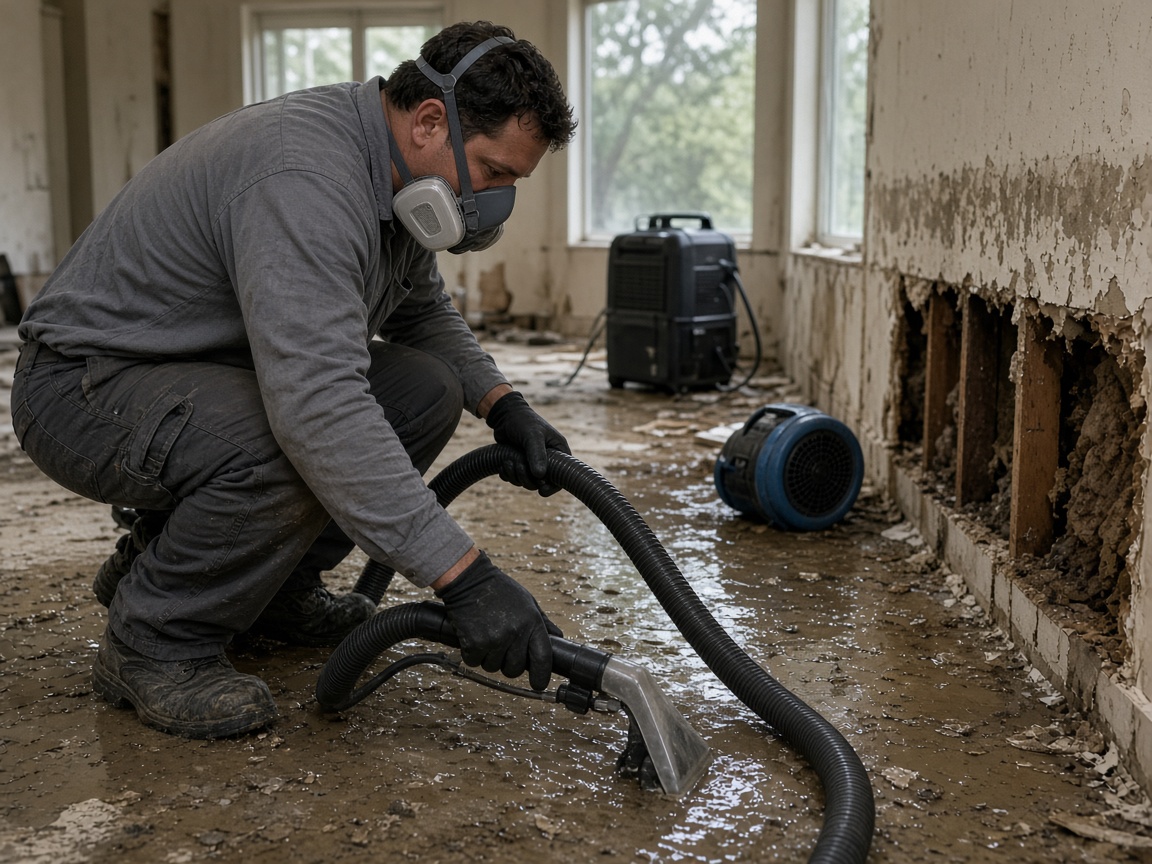
Houston's subtropical climate brings intense summer thunderstorms and occasional tropical systems that drop several inches of rain in hours. Older homes in the Heights and Montrose often sit on pier-and-beam foundations where water enters crawl spaces and stays trapped against wooden joists. In these neighborhoods, flood restoration requires removing baseboards, pulling carpet, and forcing air under the structure before mold colonies form within 48 hours. Downtown and Midtown high-rises face different issues when garage-level flooding reaches elevator pits and electrical rooms.
After standing water is removed, dehumidification must account for Houston's high ambient humidity that can re-wet drywall and insulation. Technicians set up containment barriers in River Oaks estates to protect unaffected wings while running commercial air movers and desiccants around the clock. In Pearland and Katy subdivisions built on clay soils, slab heave from prolonged saturation often cracks tile and shifts door frames, requiring moisture mapping with infrared cameras before any reconstruction begins.
Harris County floodplain rules require documentation of drying levels before permits for electrical or plumbing repairs are issued. Crews document moisture readings at multiple depths in drywall and subflooring to satisfy inspectors. Homes near the Houston Zoo or Museum of Fine Arts district frequently have finished basements or media rooms where hidden water behind built-in cabinetry leads to hidden mold if not fully addressed.
Technician insight
In Houston the thing that catches most people out with Flood Damage Restoration is how fast humidity re-soaks pier-and-beam joists in Heights homes once the sun comes out. Homeowners often stop drying too soon because the floor feels dry, yet moisture stays trapped against the subfloor and mold appears weeks later.
Heights Home After Heavy Rain
Water entered the crawl space of a 1940s bungalow during a summer storm. Infrared scans showed saturation in the subfloor and insulation. Extraction and three days of targeted drying brought readings below 12 percent before new flooring was installed.
Flood Damage Restoration Services We Offer
✓Emergency Water Extraction
Rapid removal of standing floodwater from homes in the Heights and Montrose using truck-mounted pumps and portable extractors to limit structural saturation.
✓Structural Drying and Dehumidification
Placement of industrial air movers and desiccant dehumidifiers to pull moisture from walls, subfloors, and crawl spaces common in older Houston housing stock.
✓Mold Prevention After Flooding
Application of EPA-registered antimicrobials and HEPA air scrubbing in Midtown and Downtown properties to stop mold growth triggered by humid conditions.
✓Flooded Crawl Space Restoration
Cleaning, drying, and insulation replacement in pier-and-beam homes throughout the Heights and River Oaks where water pools under the structure.
✓Slab Leak and Foundation Drying
Moisture removal beneath concrete slabs in Sugar Land and Pearland homes where clay soil expansion keeps water trapped after flooding.
Flood Damage Restoration Cost in Houston, TX
| Service | Typical Range | What Affects It |
|---|---|---|
| Water Extraction | $600–$2,200 | Varies with depth and access in crawl spaces or multi-level homes |
| Full Structural Drying | $800–$3,500 | Depends on number of rooms and humidity control needed |
| Mold Prevention Treatment | $400–$1,200 | Covers affected square footage and containment setup |
| Crawl Space Restoration | $1,100–$2,800 | Includes insulation removal and drying time |
Ranges are typical for Houston, TX and confirmed with an exact written quote before any work starts.
How it works
- 1
On-Site Assessment
Technician inspects affected rooms, measures moisture levels, and identifies hidden water paths in crawl spaces or behind walls.
- 2
Water Removal
Extraction equipment removes standing water from floors and low areas while protecting unaffected sections of the home.
- 3
Drying And Monitoring
Air movers and dehumidifiers run continuously with daily moisture readings recorded until materials reach safe levels.
- 4
Sanitization And Repairs
Antimicrobial treatment followed by removal of damaged drywall, flooring, and insulation with full documentation for insurance.
Pricing
Pricing based on square footage affected, water category, and drying duration after inspection.