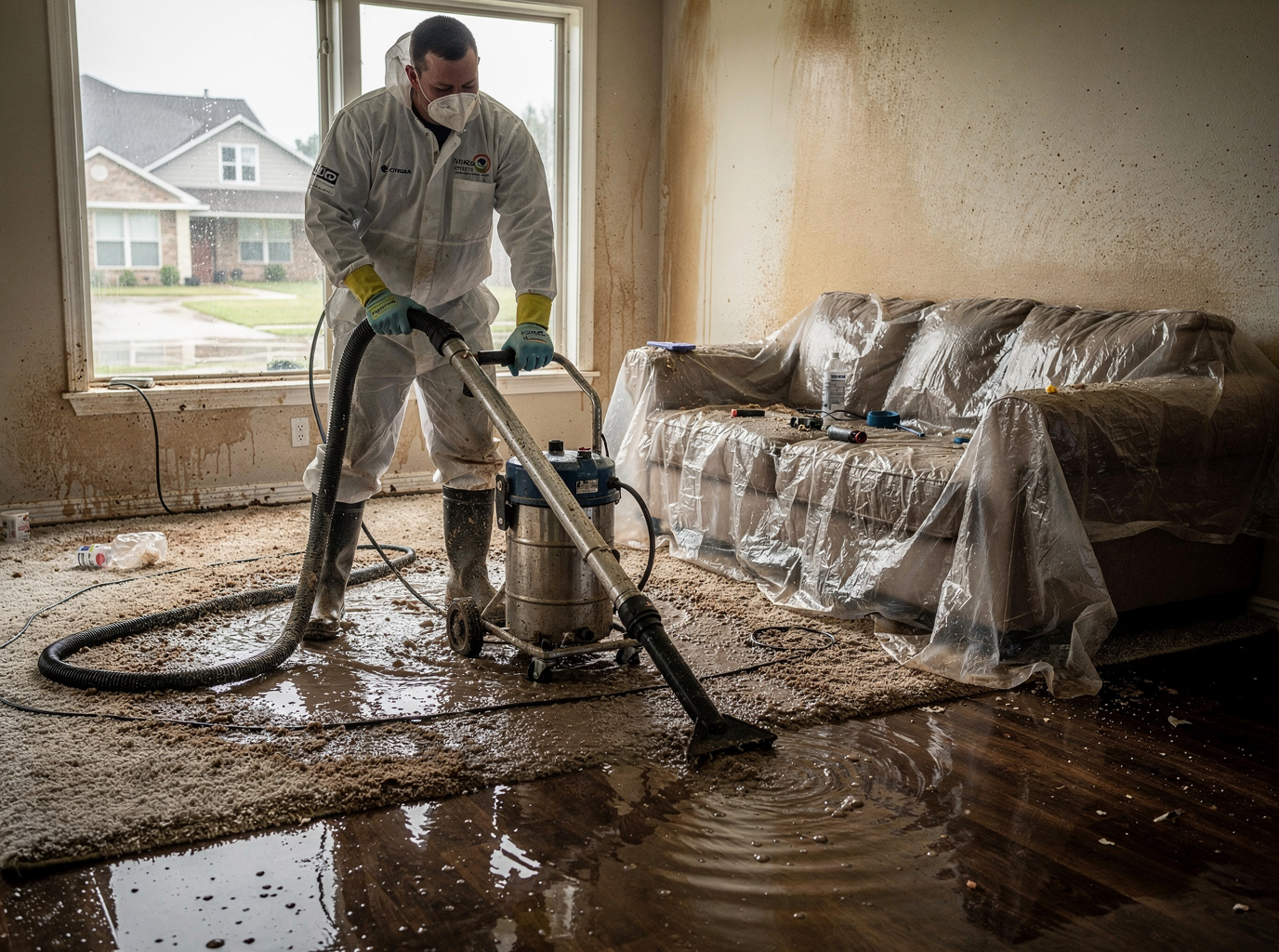
Houston's subtropical climate brings sudden heavy downpours that overwhelm older homes in the Heights and Midtown where original plumbing often runs through plaster walls and crawl spaces. Water migrates quickly into brick foundations common in River Oaks and can reach nearby properties in low-lying pockets near Buffalo Bayou. Technicians must account for the high ambient humidity that slows evaporation and raises mold risk within 48 hours if moisture is not pulled below 15 percent.
Homes built before 1970 in Downtown and Montrose frequently contain lath-and-plaster or early drywall that holds water differently than modern materials. Extraction crews use moisture meters on multiple layers and often remove baseboards to reach hidden saturation along slab edges. In Katy and Sugar Land subdivisions with clay-heavy soil, water pools against foundations during prolonged rains, requiring perimeter drying that indoor fans alone cannot achieve.
Pearland properties near drainage ditches face repeated intrusion after tropical events, so restoration plans include checking HVAC returns that pull humid air across wet carpet. Crews document every affected room with photos and readings before any demolition to satisfy insurance adjusters who know Harris County flood patterns well.
Technician insight
In Houston the thing that catches most people out with 24/7 water damage restoration is how fast the humidity re-soaks drywall and plaster in older Heights and Montrose homes once the sun comes out; you can pull water all day but if you do not keep dehumidifiers running through the night the job doubles.
Midtown Bungalow After Pipe Burst
A 1960s Midtown home lost hot water pressure overnight and soaked original hardwood and plaster walls. We extracted standing water, opened wall cavities, and ran drying equipment for four days until readings hit safe levels. The owners avoided full gutting and returned to the house within a week.
24/7 Water Damage Restoration Services We Offer
✓Emergency Water Extraction
Rapid removal of standing water from flooded rooms in Heights and Montrose homes using truck-mounted pumps before humidity sets in.
✓Structural Drying and Dehumidification
Industrial drying of walls, subfloors and cavities in older River Oaks and Midtown properties where subtropical moisture lingers.
✓Mold Prevention After Water Intrusion
Antimicrobial treatment and airflow management to stop growth in humid Houston summers following leaks in Downtown high-rises.
✓Crawl Space and Slab Leak Drying
Targeted drying under homes in Katy and Sugar Land where clay soil traps moisture against foundations after heavy rains.
✓Content Drying and Pack-Out
Removal and controlled drying of furniture and belongings from Midtown apartments and Heights bungalows to prevent secondary damage.
24/7 Water Damage Restoration Cost in Houston, TX
| Service | Typical Range | What Affects It |
|---|---|---|
| Emergency Extraction | $600–$1,800 | Higher in multi-story Heights homes with limited access |
| Full Structural Drying | $1,200–$3,500 | Depends on square footage and humidity load in summer |
| Crawl Space Drying | $800–$2,200 | Common in Katy and Sugar Land slab homes after storms |
| Mold Prevention Treatment | $400–$900 | Added when readings stay elevated beyond 48 hours |
Ranges are typical for Houston, TX and confirmed with an exact written quote before any work starts.
How it works
- 1
Arrival And Assessment
Technician arrives within hours, locates the source, and maps moisture across every room using meters calibrated for Houston humidity levels.
- 2
Water Removal
Pumps and extractors clear standing water from slabs and carpets while protecting original hardwood floors common in Montrose homes.
- 3
Drying Setup
Air movers and dehumidifiers are placed based on readings from plaster walls and crawl spaces typical in the Heights and River Oaks.
- 4
Monitoring And Clearance
Daily checks continue until moisture readings drop below safe thresholds, then final documentation is provided for insurance in Harris County.
Pricing
Upfront quotes after on-site inspection; ranges reflect home age, water volume and access in older Houston neighborhoods.