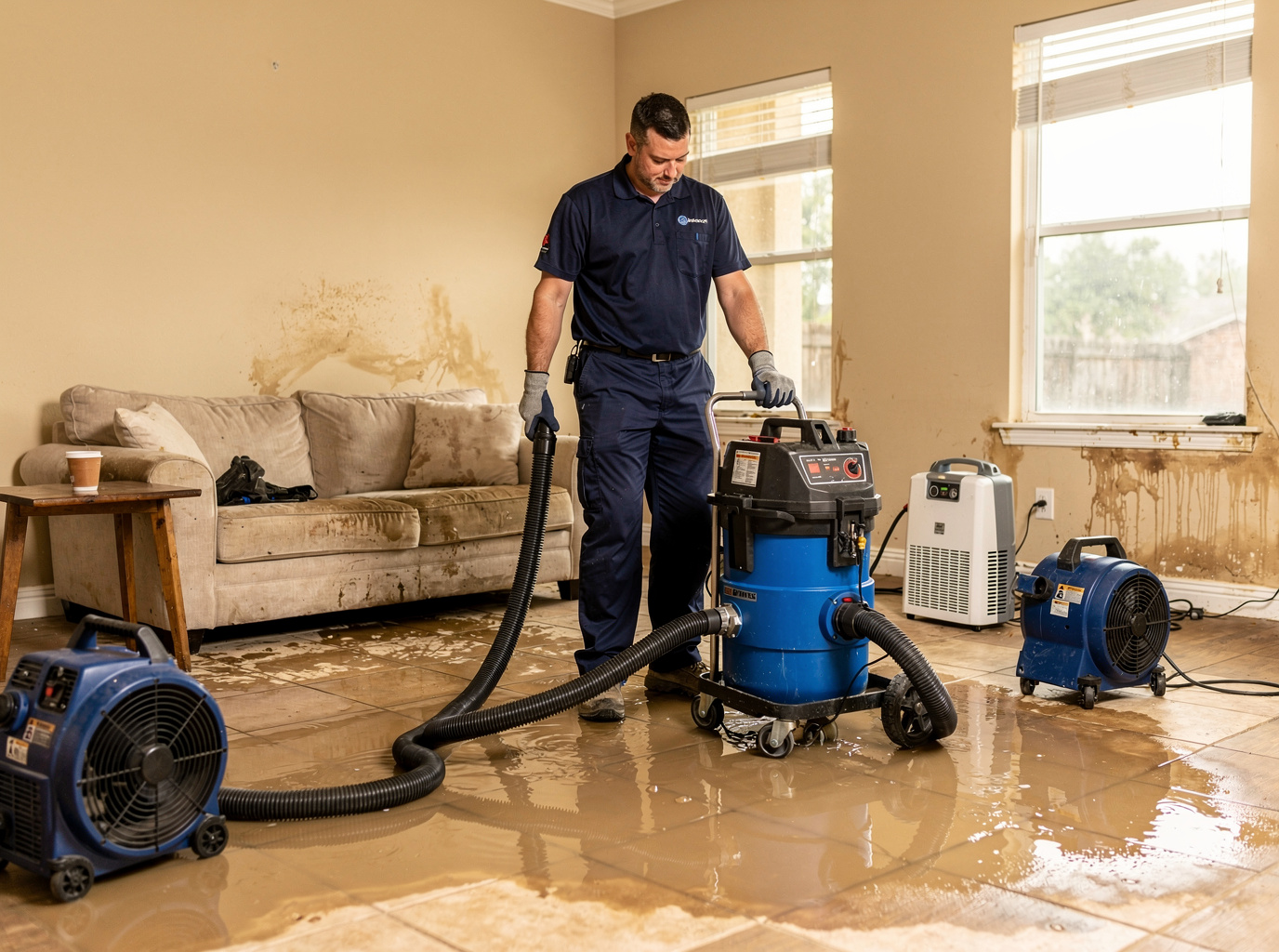
Houston's flat terrain and heavy rains in Harris County often push water under slabs and into crawl spaces of homes built before the 1980s in neighborhoods like the Heights and Montrose. Older cast-iron pipes and unsealed foundations allow moisture to travel far from the original leak, creating hidden pockets that standard drying equipment misses. Restoration crews must pull baseboards, use moisture meters on drywall, and run commercial dehumidifiers longer than in drier climates because the air stays saturated even after visible water is gone.
Mild winters do not stop mold growth the way colder northern states do, so any water event in Midtown or Downtown requires rapid containment to keep spores from spreading through HVAC systems common in these mid-century homes. Technicians check for secondary damage in plaster walls and hardwood floors that absorb water differently than newer materials. Homeowners in nearby Katy and Sugar Land face similar issues when bayou overflow reaches slab edges, forcing crews to remove and replace insulation under the structure rather than just surface drying.
Pearland properties built on clay-heavy soil shift during wet periods, cracking foundations and letting rainwater enter at the footing. Restoration work here includes documenting every step for insurance adjusters who know local flood patterns, and crews often return after initial drying to verify that hidden moisture has dropped below 15 percent before rebuilding begins.
Technician insight
In Houston the thing that catches most people out with residential water damage restoration is how quickly humidity in the subtropical air re-wets drywall and insulation after the visible water is gone, especially in 1950s and 1960s homes in the Heights and Montrose where original plaster meets modern HVAC runs.
Midtown Slab Leak
A homeowner in Midtown noticed buckling hardwood after a week of heavy rain. We found a hairline slab crack allowing water to travel under the finished floor and into the subfloor. Extraction and targeted drying prevented mold growth under the cabinets, and the floor was restored without full replacement.
Residential Water Damage Restoration Services We Offer
✓Burst Pipe Restoration
Locate and isolate the break, remove saturated drywall and insulation, then dry the cavity with targeted air movers before rebuilding.
✓Slab Leak Water Extraction
Cut access points through tile or carpet, extract standing water beneath the slab, and monitor moisture levels in the subfloor over several days.
✓Mold Remediation After Water Damage
Contain affected rooms, remove porous materials, apply antimicrobial treatments, and run HEPA filtration until spore counts return to normal.
✓Flooded Basement Cleanup
Pump out water from below-grade spaces common in older Heights and Montrose homes, disinfect surfaces, and install temporary dehumidification.
✓Appliance Leak Restoration
Disconnect the source, pull wet flooring and underlayment, dry the subfloor, and check for hidden moisture behind adjacent cabinets.
Residential Water Damage Restoration Cost in Houston, TX
| Service | Typical Range | What Affects It |
|---|---|---|
| Initial assessment and water extraction | $350–$750 | Varies with access difficulty in slab homes common in River Oaks and Midtown. |
| Three-day drying package | $800–$1,600 | Longer runs needed during humid summer months in Harris County. |
| Mold remediation add-on | $500–$1,200 | Depends on square footage and whether HVAC ducts require cleaning. |
| Content drying and moving | $200–$450 | Higher in two-story Heights homes with finished basements. |
Ranges are typical for Houston, TX and confirmed with an exact written quote before any work starts.
How it works
- 1
Arrival and Assessment
Technician arrives within the service window, maps all wet materials with meters, and documents damage for insurance in homes across Montrose or the Heights.
- 2
Water Removal
Extract standing water with portable pumps and wands, then set up air movers and dehumidifiers sized for Houston humidity levels.
- 3
Drying and Monitoring
Run equipment for several days while checking moisture daily until readings stabilize, adjusting placement for slab or pier-and-beam construction.
- 4
Sanitizing and Rebuild Planning
Apply treatments to prevent microbial growth, remove unsalvageable materials, and coordinate with the homeowner on replacement steps.
Pricing
Most residential jobs in Houston fall into a mid-range cost based on square footage affected and drying time required by local humidity.