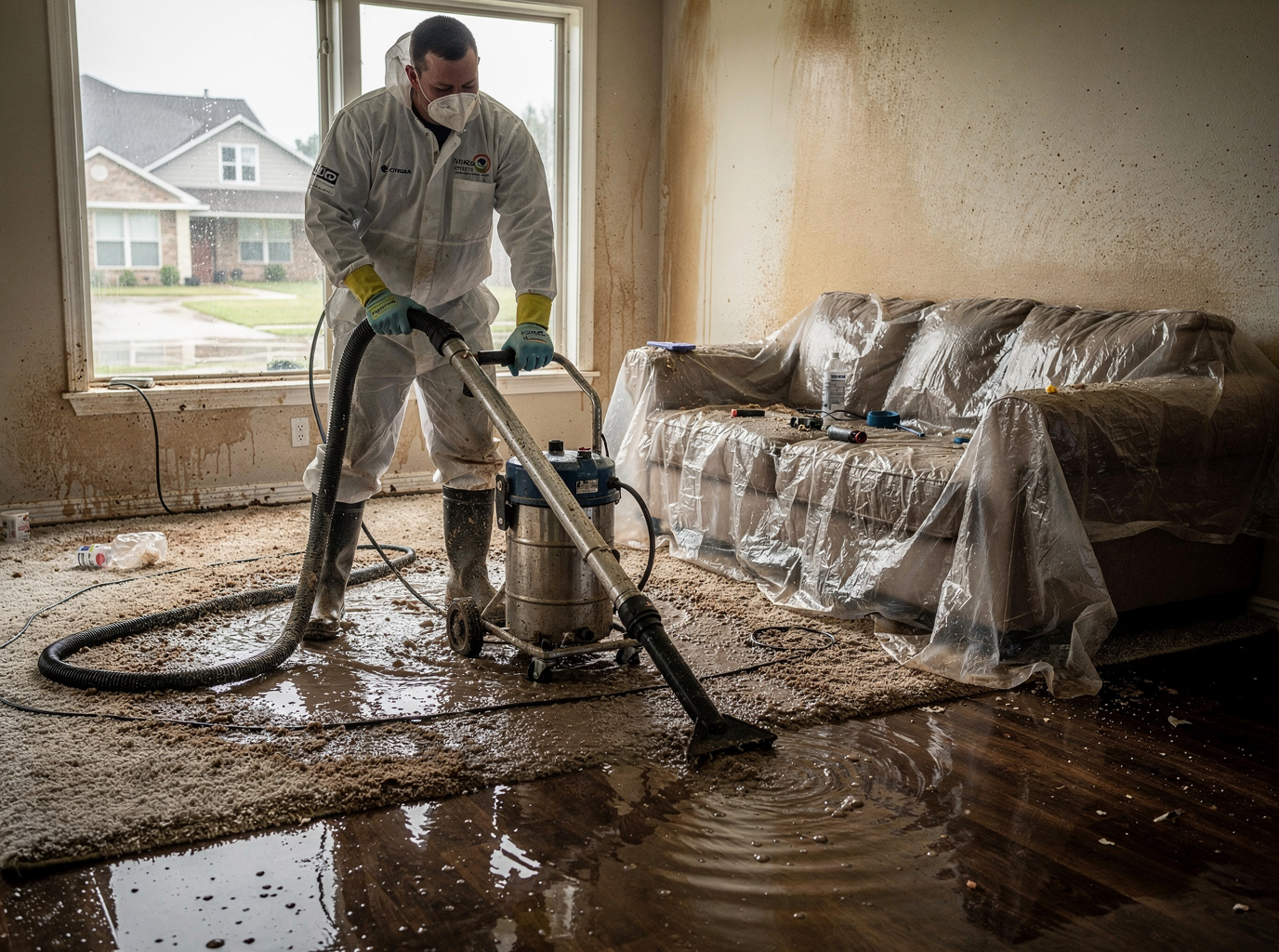
Rosenberg homes along Avenue H and near Seabourne Creek often face water intrusion after Gulf-driven storms. Slab foundations common in 1960s ranch houses trap moisture when heavy rain overwhelms the shallow ditches that line many lots. Our crew travels from the 77041 shop via US 59 to reach these properties the same morning, pulling carpet and setting containment before humidity climbs again.
The mix of pre-1970 frame houses and newer additions near Lamar Consolidated schools creates different drying challenges. Older crawlspaces collect standing water from poor grading while newer vinyl plank floors hide leaks under cabinets. We map moisture with meters on every visit so repairs target only the affected joists and drywall rather than opening entire rooms.
Access from our Houston base lets us serve Rosenberg before evening traffic builds on FM 2218. We stage equipment at the curb on narrow residential streets and finish extraction the same day so families can return without long hotel stays.
Around 30. Rosenberg
We regularly work near:
- 📍Seabourne Creek Nature Park
- 📍Rosenberg Railroad Museum
- 📍Avenue H in downtown Rosenberg
- 📍Lamar Consolidated High School
- 📍Fort Bend County Fairgrounds
- 📍Reading Road drainage corridor
Water Damage Repair in 30. Rosenberg — Local Notes
- •Many Rosenberg lots sit on clay soils that hold water after subtropical downpours, forcing longer drying times under slabs than in sandy Houston neighborhoods.
- •Homes near the railroad tracks often have shallow foundations and limited side-yard access, requiring smaller portable equipment to reach affected walls without tearing up driveways.
- •Heavy summer humidity speeds mold growth on wet drywall within 48 hours, so we prioritize dehumidifier placement in Rosenberg properties the same day water is extracted.
- •Drainage ditches along Reading Road and nearby streets frequently back up during prolonged rains, sending water under garage slabs that then migrates into living areas.